

Choosing a Commercial Van in 2026: The Guide to Getting It Right
A commercial van is first and foremost a tool. For an electrician hauling ladders and conduits, or a delivery driver navigating city rounds, the wrong choice hits hard: a van too small forcing double trips, a pick-up guzzling 12 L/100 km when a compact would have sufficed, or worse—a vehicle that won’t even fit into the workshop. Here’s how to avoid these headaches and find the model that fits your needs.
1. Licence, GVW and Registration: The Basics to Know Before Buying
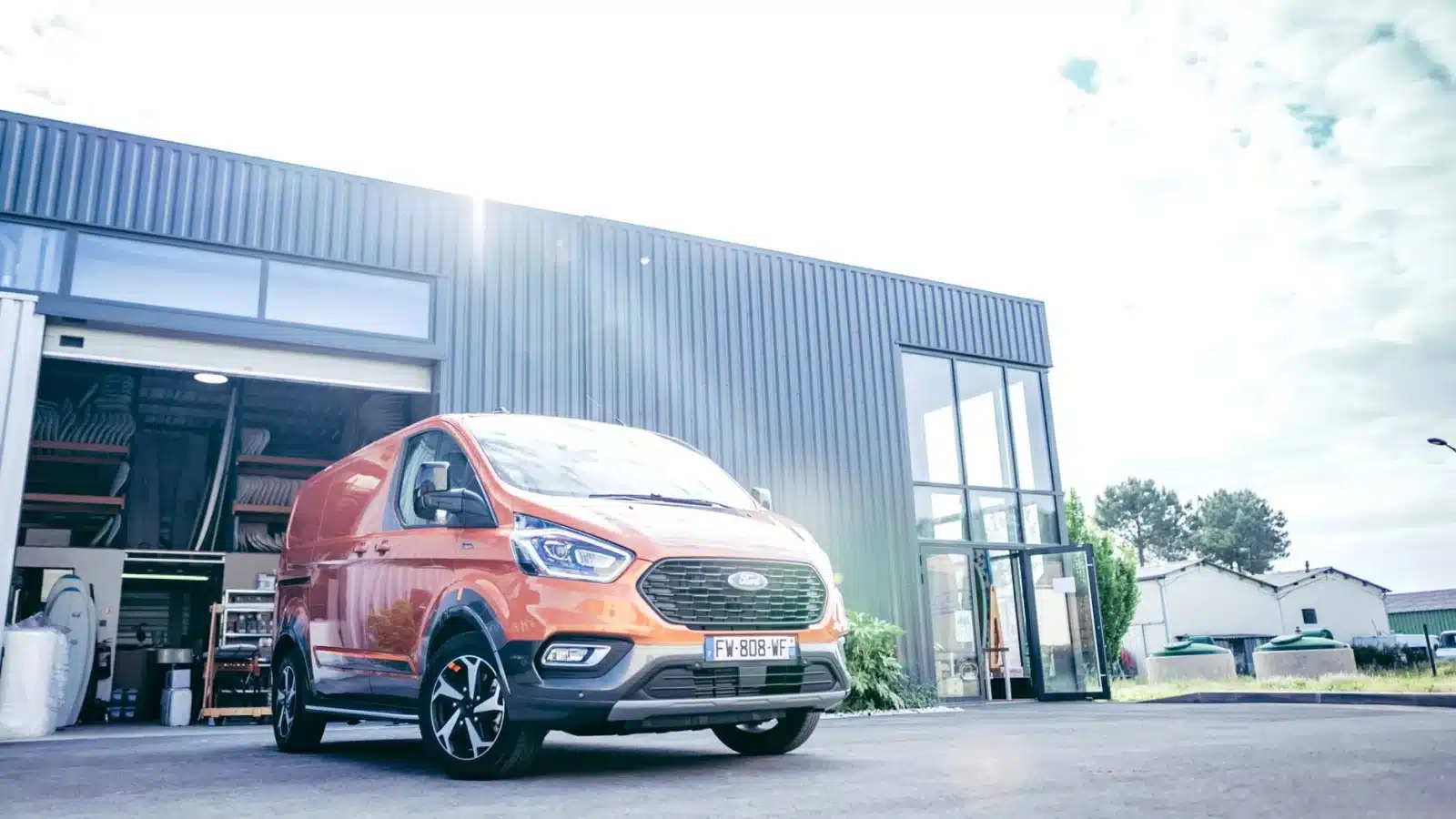
A light commercial vehicle (marked CTTE on the registration certificate) can be driven with a standard category B licence, provided its GVW (gross vehicle weight) does not exceed 3.5 tonnes. Beyond that, a category C licence is required. This threshold changes everything: a 3.5-tonne Ford Transit Custom remains accessible without additional training, but a 5-tonne Mercedes Sprinter demands a heavy goods vehicle licence. And if you’re towing a trailer over 750 kg, the B96 endorsement on your category B licence becomes mandatory to stay under 4,250 kg.
Another key point: the CTTE (light commercial vehicle) designation in box J.1 of the registration certificate. It distinguishes a commercial van from a passenger vehicle and grants tax advantages, such as full exemption from the Company Vehicle Tax (TVS). A van converted into a camper, however, is reclassified as a VASP (specialised motor vehicle): no TVS exemption, but also more administrative constraints—and crucially, no legal right to sleep in it without risking a fine.
How to Check the GVW and Category of Your Future Van
- The GVW is listed on the registration certificate (box F.2) and on the sticker inside the driver’s door frame—check it before signing.
- The CTTE designation appears in box J.1 of the registration certificate; if it says VP (passenger vehicle), it’s not a commercial van.
- A CTTE commercial van must have exactly 2 seats (driver + passenger), no rear bench, no additional seating.
2. What Volume for What Use? The 3 Types of Commercial Vans
Cargo volume determines everything. A tradesperson hauling bags of cement doesn’t have the same needs as a courier delivering parcels. Here’s how to navigate the options, with concrete examples.
Compact Vans (under 4 m³): The Urban Tradesperson’s Weapon
For a plumber carrying tools and a few pipes, or a courier making city rounds, a Renault Kangoo or Peugeot Partner (3 to 3.8 m³) is sufficient. Enough for a toolbox, parcels, or light construction materials—but too tight for furniture or pallets. The advantage? You can park anywhere, even in the narrow streets of Paris or Lyon.
Strengths:
- Easy manoeuvring in cities and hassle-free parking, even in underground car parks.
- Reasonable fuel consumption (5 to 6 L/100 km for diesel, less for electric).
- Affordable purchase price (from €20,000 new, €10,000 used).
Limitations:
- Volume too limited for bulky loads—plasterboard or furniture are out of the question.
- Internal height often under 1.20 m, making loading while standing uncomfortable—and sleeping in it impossible without contorting.
Panel Vans (4 to 10 m³): The Professional Standard
This is the most versatile category. A Citroën Jumper or Ford Transit Custom (6 to 9 m³) suits most professional needs: pallets, construction materials, furniture. Tall enough to load while standing, without being too cumbersome in the city. Ideal for an electrician transporting conduits and electrical panels, or a removal company fitting a fridge and washing machine.
Strengths:
- Volume sufficient for most professional uses, even the most demanding.
- Internal height up to 1.90 m—you can load while standing and even sleep in it in a pinch.
- Robust engines (2.0 HDi or EcoBlue diesel, proven reliability).
Limitations:
- Bulky in the city (up to 5.40 m long), tricky to park in narrow streets.
- Higher fuel consumption (7 to 9 L/100 km).
- Higher purchase price (from €30,000 new).
Pick-ups (variable volume): The Off-Road Option for Professionals
A pick-up like the Ford Ranger or Toyota Hilux offers an open bed at the rear, perfect for transporting bulky materials, bags of compost, or wooden planks without worrying about soiling the cabin. The usable volume depends on the bed size (1.2 to 2.5 m³), but the advantage is modularity: you can add a closed box or tarpaulin as needed. And with four-wheel drive, you can go anywhere—even on muddy construction sites.
Strengths:
- Off-road capability: wading depth up to 80 cm, four-wheel drive, ideal for construction sites or rural areas.
- Open bed: practical for dirty or bulky materials—no need to clean everything afterwards.
- Favourable tax treatment: a double-cab pick-up (5 seats) is classified as a passenger vehicle but with specific tax advantages (accelerated depreciation, VAT reclaimable under conditions).
Limitations:
- High fuel consumption (9 to 12 L/100 km)—budget accordingly.
- Bulky (up to 5.50 m long), difficult to park in the city.
- High purchase price (from €35,000 new).
3. Taxation and Running Costs: What Your Accountant Won’t Tell You

A CTTE commercial van is exempt from the Company Vehicle Tax (TVS), saving businesses several thousand euros per year. But beware: if you opt for a double-cab pick-up, it will be classified as a passenger vehicle and subject to TVS (between €2,000 and €6,500 per year depending on taxable horsepower). And if you exceed 192 g/km of CO₂, the ecological penalty can climb to €80,000—enough to make you think twice before choosing a large diesel.
Another key point: VAT reclaim. For a CTTE commercial van, VAT is fully reclaimable if the vehicle is used 100% for business purposes. For a pick-up, it’s more complicated: VAT is only reclaimable at 50% if the vehicle is used for both business and personal purposes. And since 2025, the ecological bonus for businesses has disappeared—no more purchase incentives for electric vehicles, even for professionals.
Lease Purchase or Long-Term Lease: Which Option for Your Business?
Lease Purchase (LOA) allows you to become the owner of the vehicle at the end of the contract—ideal if you want to depreciate the vehicle over the long term. Long-Term Lease (LLD), on the other hand, is a pure rental: you return the vehicle at the end of the contract with no purchase option. In both cases, the monthly payments are deductible from taxable income, but LLD offers more flexibility (changing vehicles every 3 or 4 years).
| Criteria | Lease Purchase (LOA) | Long-Term Lease (LLD) |
|---|---|---|
| Purchase option | Yes (residual value) | No |
| VAT reclaimable | Yes (if 100% business use) | Yes (if 100% business use) |
| TVS exemption | Yes (if CTTE) | Yes (if CTTE) |
| Flexibility | Low (long-term commitment) | High (vehicle change possible) |
| Total cost | Lower (if final purchase) | Higher (pure rental) |
4. Reliability and Maintenance: Models to Avoid (and Those to Prioritise)
A commercial van is an investment, and some models cost more to maintain than others. For a tradesperson who can’t afford a breakdown, choosing the right model is crucial. Here’s what you need to know before signing.
Reliable Models (and Those to Avoid)
The Ford Transit Custom (2.0 EcoBlue engine) is a safe bet: proven reliability, lifespan exceeding 250,000 km without major issues. By contrast, the Citroën Berlingo (second generation, 2008–2018) had recurring problems: faulty vacuum pump, fragile clutch, and a 2023 recall for a defective fuse box. If you opt for a Berlingo, ensure it was recalled and budget for higher maintenance costs.
Other models to watch:
- Renault Trafic (2014–2021): turbo and gearbox issues on 1.6 dCi diesel versions—avoid if the service history isn’t impeccable.
- Peugeot Boxer (2014–2021): frequent oil leaks and air conditioning problems—a let-down for a vehicle meant to be robust.
- Volkswagen Crafter (2017+): decent reliability, but high maintenance costs—parts are expensive, and VW garages don’t come cheap.
Where to Buy a Used Commercial Van? The Right Places
For a used commercial van, prioritise government auctions (encheres-domaine.gouv.fr): you’ll find state-owned vehicles, often well-maintained and at reduced prices. Another option: specialist sites like Utilitaire-Pratique or Comptoir-Utilitaire, which offer reconditioned vehicles with warranties. And if you’re targeting a specific model, tradesperson forums are full of advice—a sparky who’s clocked 200,000 km in their Transit Custom will tell you whether they’d buy it again.
Key points to check before buying:
- Mileage: a van with over 200,000 km can still be reliable—provided it’s been well-maintained (service history is a must).
- History: ensure the vehicle hasn’t been in an accident (HistoVec report is mandatory).
- Wear and tear: check the condition of tyres, brakes, and suspension—expensive parts to replace, especially on a heavy van.
5. Mistakes to Avoid When Choosing a Commercial Van

Choosing a commercial van is like choosing a tool: a mistake in size or capacity can be costly. For a tradesperson hauling plasterboard, a 3 m³ compact will be too small, forcing double trips. For a landscaper driving on muddy tracks, a standard panel van will get stuck, requiring a recovery call. Here are the most common pitfalls—and how to avoid them.
1. Underestimating the Required Volume
A tradesperson transporting plasterboard needs at least 6 m³—a compact (3 m³) won’t cut it. Before buying, measure your bulkiest loads and add a 20% margin. And if you carry long items (ladders, pipes), check the loading length—some vans have a 3 m load space, others 4 m.
2. Overlooking Internal Height
A van with an internal height of 1.40 m is uncomfortable for loading while standing—and impossible for sleeping in during a stopover. Opt for a model with at least 1.70 m of headroom if you load regularly. And if you transport fragile items (mirrors, glass), check the loading height—some vans only offer 1.50 m.
3. Ignoring Tax Implications
A double-cab pick-up is classified as a passenger vehicle and subject to Company Vehicle Tax (TVS). To avoid this tax, choose a CTTE commercial van (2 seats). And if you exceed 192 g/km of CO₂, the ecological penalty can climb to €80,000—enough to make you think twice before opting for a large diesel. Finally, since 2025, the ecological bonus for businesses has disappeared—no more purchase incentives for electric vehicles, even for professionals.
4. Choosing an Unreliable Model
A breakdown means a lost workday and a hefty recovery bill. Before buying, check the model’s common issues (turbo, gearbox, air conditioning) and prioritise brands known for reliability (Ford, Volkswagen). And if you opt for a model with known problems (like the Citroën Berlingo), budget for higher maintenance costs—and a backup vehicle.
5. Neglecting Maintenance
A commercial van needs regular upkeep. Oil changes every 20,000 km, turbo and gearbox checks every 100,000 km—regular maintenance extends the vehicle’s lifespan and prevents costly breakdowns. And if you drive a lot, budget for higher tyre and brake costs—these parts wear quickly on heavy vehicles.
6. Which Van for Which Trade? The Right Choices by Use
Not all commercial vans are equal. A courier needs a manoeuvrable vehicle, a tradesperson needs ample volume, and a landscaper needs off-road capability. Here’s how to choose, with concrete examples.
| Trade | Main Need | Recommended Model | Useful Volume |
|---|---|---|---|
| Courier (parcels, groceries) | Manoeuvrability, fuel efficiency | Renault Kangoo / Peugeot Partner | 3 to 4 m³ |
| Tradesperson (electrician, plumber) | Volume, internal height | Ford Transit Custom / Citroën Jumper | 6 to 9 m³ |
| Landscaper / Gardener | Off-road, open bed | Ford Ranger / Toyota Hilux | 1.2 to 2.5 m³ (bed) |
| Removals | Maximum volume, height | Mercedes Sprinter / Renault Master | 10 to 17 m³ |
| Courier (documents, small parcels) | Manoeuvrability, running costs | Peugeot e-Partner (electric) | 3.3 m³ |
7. Alternatives to Buying: Rental, Leasing, and Used Vans
Buying a new commercial van is a major investment—and not always necessary. For a tradesperson starting out or a business testing a new market, rental or leasing can be more flexible solutions. Here are the alternatives, with their pros and cons.
Short-Term Rental: The Occasional Solution
Ideal for occasional needs (moving, temporary site work), short-term rental lets you hire a van for a few days or weeks. Cost: between €50 and €150 per day depending on the model. The advantage? No long-term commitment, and a new or well-maintained vehicle. The downside? The cost can quickly become prohibitive over time, and mileage is often limited to 200 km/day.
Advantages:
- No long-term commitment—perfect for occasional needs.
- New or well-maintained vehicle, no nasty surprises.
- Insurance included, no extra paperwork.
Disadvantages:
- High cost over time—reserved for occasional needs.
- Mileage limit (often 200 km/day)—not suitable for long trips.
Leasing (Lease Purchase/LLD): The Flexible Solution
Leasing lets you drive a new van without buying it. Lease Purchase (LOA) allows you to become the owner at the end of the contract, while Long-Term Lease (LLD) is a pure rental. Cost: between €200 and €600 per month depending on the model and duration (36 to 60 months). The advantage? A new or well-maintained vehicle, often with maintenance included. The downside? Higher total cost than an outright purchase, and limited mileage (often 15,000 to 20,000 km/year).
Advantages:
- New or well-maintained vehicle, no nasty surprises.
- Maintenance often included (depending on the contract)—no unexpected costs.
- Flexibility (vehicle change possible at the end of the contract)—ideal for businesses testing different models.
Disadvantages:
- Higher total cost than an outright purchase—reserved for businesses wanting to preserve cash flow.
- Mileage limit (often 15,000 to 20,000 km/year)—not suitable for high-mileage drivers.
- Penalties for early return—budget accordingly.
Buying Used: The Budget-Friendly Option
A well-chosen used van can be as reliable as a new one—provided you check its history and maintenance. Cost: between €10,000 and €30,000 depending on age and mileage. The advantage? A lower purchase price and no mileage limits. The downside? Higher risk of breakdowns and a warranty often limited to 6 months. To minimise risks, prioritise models known for reliability (Ford Transit Custom, Volkswagen Crafter) and check the service history.
Advantages:
- Lower purchase price—ideal for tight budgets.
- No mileage limits—suitable for high-mileage drivers.
- Wide choice of models—possibility of finding rare or discontinued vehicles.
Disadvantages:
- Higher risk of breakdowns (depending on maintenance)—budget accordingly.
- Limited warranty (often 6 months)—no long-term protection.
- Potentially high maintenance costs—check before buying.