

Changing the registered keeper, requesting a duplicate, registering an imported vehicle—each V5C (vehicle registration document) procedure has its own form, legal deadline, and cost. This page guides you to the right process for your situation, whether you’ve just bought a used car or lost your registration certificate.
Each V5C procedure follows different rules depending on your circumstances.
- Changing the registered keeper after a purchase must be done within a month, or you risk a fine of £135 to £750.
- A duplicate, transfer of ownership, or import doesn’t require the same documents or deadlines.
- The base fee is €13.76, but it quickly rises with the regional tax and any potential eco-penalty.
Documents to gather before starting any procedure
Before you begin, it’s best to know what you’ll need. Most V5C procedures require a core set of documents: proof of identity, a proof of address less than six months old, the Cerfa form for your situation (13750*08 for a change of keeper), and the previous registration certificate. For a vehicle over four years old, you’ll also need a valid MOT (roadworthiness test) less than six months old—without it, your application will be rejected. According to the ANTS (French National Agency for Secure Documents), missing even one document is enough to block online validation. It’s best to check the full list for your specific procedure before starting.
Where to process your V5C in 2026: three options available
There are three ways to submit a V5C application, and none involve visiting a prefecture counter—this service closed in 2017. First option: the official ANTS website, which is free (excluding legal taxes), where you create an account and follow each step of the process. Second option: an authorised professional (garage, dealership, or approved agent), who charges a service fee on top of the official taxes but handles the application for you. Third option: digital assistance points in some town halls and France Services centres, designed for those less comfortable with online procedures.

Your choice depends mainly on how much time you want to spend. The ANTS website costs nothing beyond the legal tax, while a professional typically charges €20 to €100 in service fees, depending on the case.
Changing the registered keeper: the most common procedure
Just bought a used car? The law gives you one month—no more—to update the V5C in your name. After that, the fine ranges from €135 to €750, according to the ANTS. The application requires Cerfa form 13750*08, a recent proof of address, the previous V5C crossed out with “sold” and the transfer date, and an MOT less than six months old if the vehicle is over four years old.

Budget-wise, expect at least €13.76 (€11 in fixed tax plus €2.76 for postage), plus the regional tax based on the vehicle’s fiscal power. In practice, the total cost usually ranges between €200 and €500, depending on the region and the car’s power. Processing typically takes 7 to 10 days if all documents are submitted correctly, with the certificate arriving within 3 to 5 working days after approval. To avoid mistakes, the dedicated page on changing the registered keeper lists the exact documents required for your situation, including purchases outside your region.
Duplicates and modifications: when the existing V5C needs updating
Not all procedures start with a purchase. A lost, stolen, or damaged V5C requires a duplicate; a change of address, a name change after marriage, or adding a tow bar requires a simple modification. The documents vary each time, but the principle remains the same: the registration certificate must always reflect the vehicle’s and owner’s current situation.
Inheritance cases highlight the complexity. If the registered keeper has died, no duplicate can be issued in their name. Heirs must either transfer the vehicle into their name—requiring a death certificate, full family record book, and a signed statement from all heirs for a straightforward inheritance—or sell it, which requires a prior transfer declaration. The duplicates and modifications page explains the steps depending on the family situation.
Transfer of ownership and purchase: securing the transaction before registration
A poorly prepared transfer delays everything. The seller must provide a transfer certificate signed by both parties, a certificate of administrative status less than 15 days old, and—for a vehicle over four years old—an MOT less than six months old. Without the latter, the buyer cannot register the vehicle in their name, even if the rest of the application is complete.
Common pitfalls in transfers and purchases include a V5C that isn’t properly crossed out, a mileage reading that doesn’t match the declaration, or a previous keeper who can’t be contacted for signature. Addressing these points before signing avoids back-and-forth with the ANTS.
Registration and import: procedures for vehicles from abroad
A vehicle bought abroad—even within the EU—cannot legally be driven in France until it has its own registration certificate. First, you’ll need a tax clearance certificate (quitus fiscal), proving VAT has been paid, along with a European certificate of conformity or an individual vehicle approval. In the meantime, a temporary WW registration plate allows you to drive while the application is processed.
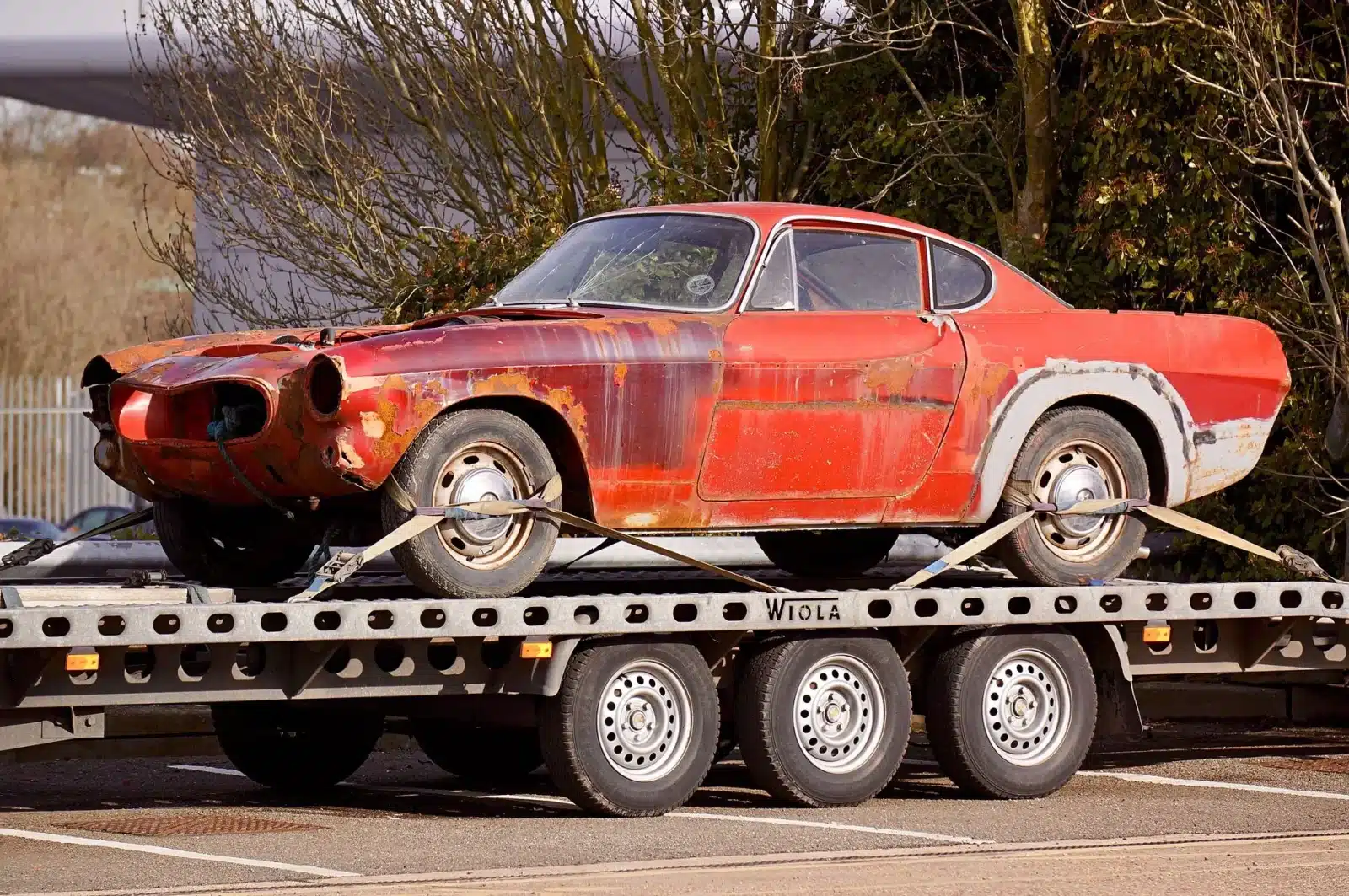
The registration and import procedures differ significantly depending on whether the vehicle comes from an EU country or elsewhere, and its age. A model over 30 years old is exempt from some requirements but still needs standard registration.
Eco-penalty and taxes: what adds to the base cost
The regional tax isn’t the only thing that inflates the bill. A new or recent used vehicle may be subject to an eco-penalty based on CO₂ emissions, sometimes running into thousands of euros for the most powerful models. An additional tax on administrative power may also apply to heavier vehicles.
The final amount depends on the vehicle’s first registration date and the rates in force at the time of the application—not when the vehicle was bought. To check the applicable rate for your car, it’s best to consult the eco-penalty and taxes page, which tracks regulatory updates throughout the year.
MOT: a document to check before submitting your application
The MOT (roadworthiness test) crops up in nearly all the procedures mentioned above—and for good reason: without a test less than six months old, a vehicle over four years old cannot be transferred or registered in a new keeper’s name. A failed MOT, pending a retest, also blocks the application.

Checking the validity date before starting a procedure avoids a trip back to the test centre mid-application. The MOT page lists the most common reasons for a retest—useful to know before a transfer.
Tracking your application and anticipating delays after submission
Once your application is submitted via the ANTS website, your personal account shows its progress in stages, from receipt to dispatch of the final certificate. An “awaiting document” status almost always means a blurred document or missing item—correct it quickly to avoid restarting the entire validation process. The provisional registration certificate, printable from your ANTS account once the application is approved, allows you to drive legally while waiting for the final V5C.
If you hear nothing after 15 days despite a complete application, a call to the ANTS national helpline (3400) or a complaint via the contact form can resolve the issue—there’s no longer a physical counter to visit. Keeping a digital copy of every document sent avoids having to reconstruct everything in case of a dispute.
Common mistakes and misconceptions about the V5C
Some myths persist. The most widespread: thinking that moving to another département requires changing your registration number. This hasn’t been true since 2009 and the switch to the national SIV system—the plate number no longer depends on your département of residence, and no specific procedure is needed for this reason alone.
Another frequent confusion: believing a duplicate can be requested in the name of a deceased relative to speed things up. This is never possible. The vehicle must first be transferred to an heir’s name or sold by the estate before any further steps can be taken.
One last misconception concerns the MOT—some drivers think a pending retest doesn’t prevent a sale, as long as the initial report still exists. In reality, a failed MOT blocks the transfer until a successful retest is obtained, regardless of how old the initial report is.
Deadlines and costs to anticipate depending on the procedure
Official costs and deadlines vary significantly depending on the situation. Here are the key points to remember before starting an application.
| Procedure | Legal deadline | Indicative cost |
|---|---|---|
| Change of registered keeper (used purchase) | 1 month after purchase | From €13.76 + regional tax (€200 to €500 on average) |
| Inheritance | No legal deadline, but should be handled promptly | Around €13.76, excluding inheritance fees |
| Duplicate / modification | Varies by reason | Varies depending on the nature of the change |
Identifying your exact situation first helps you choose the right page and avoid back-and-forth with the ANTS.