

Fleet Management and Business LCV Leasing: How to Choose Wisely
A fleet of light commercial vehicles (LCVs) means a budget to control and decisions to make: long-term leasing without an upfront payment, GPS tracking software, or onboard telematics to analyse journeys. This subcategory helps you find the right solution for your business. A delivery SME in the Île-de-France region will need flexible long-term leasing to renew its vehicles without tying up capital, while a construction tradesperson in a rural area will prioritise telematics to optimise routes and cut fuel consumption.
Each article in this subcategory answers a specific question: how to finance your fleet, which tools to use for vehicle tracking, or how to take advantage of tax benefits for LCVs. Here’s how to navigate the options.
1. Long-term leasing (LLD) with no upfront payment: who is it for and at what cost?
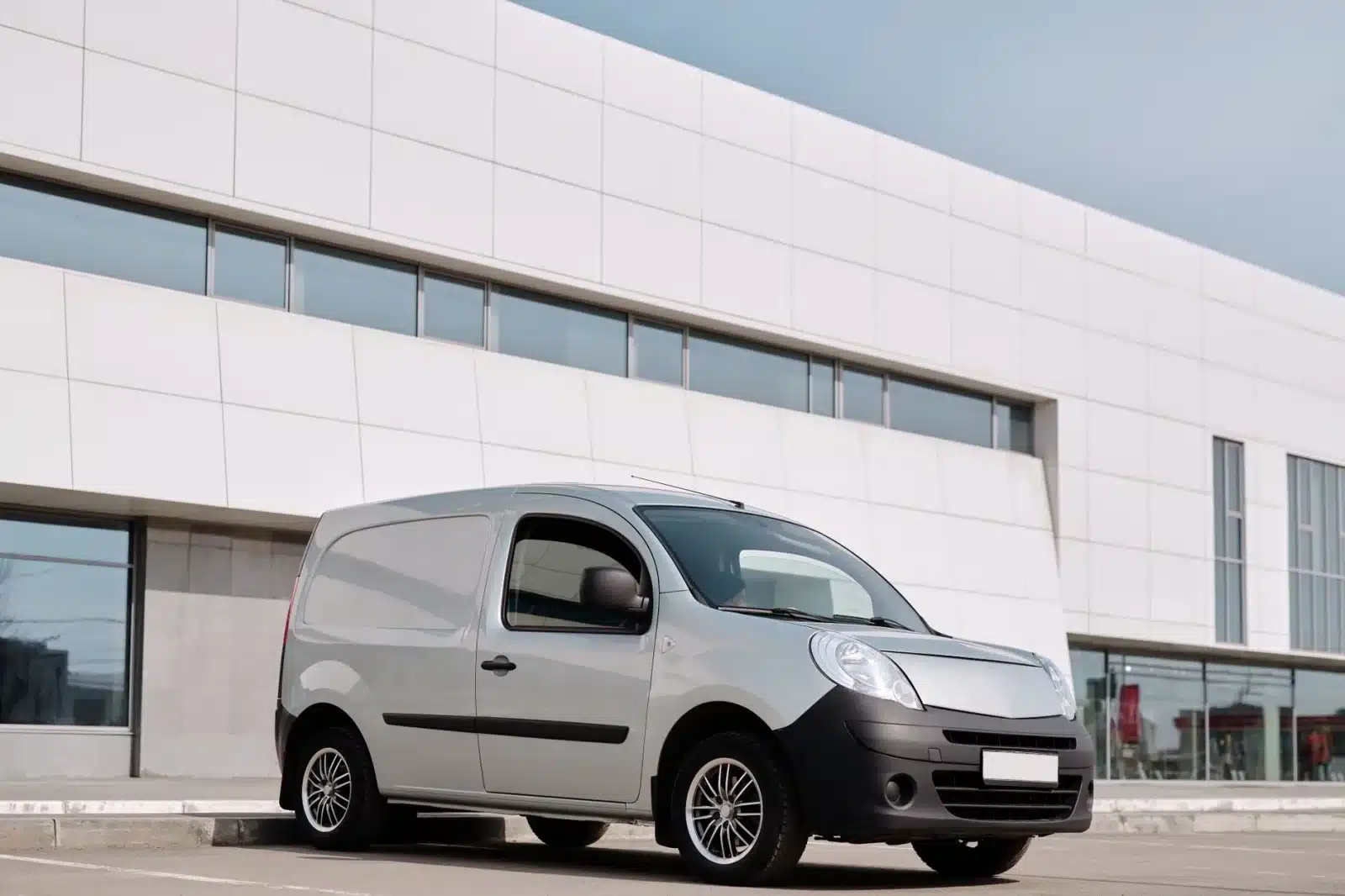
Long-term leasing with no upfront payment lets you drive new LCVs without tying up capital. The monthly payments cover vehicle use, maintenance, and sometimes insurance, with tax benefits to boot: full deductibility of leasing payments for LCVs, 100% VAT recovery, and exemption from the annual tax on emissions.
Take a Renault Kangoo electric on a 48-month LLD contract with 20,000 km/year: the monthly payment ranges from €350 to €450 excluding VAT, depending on the options. Several factors influence this price:
- The model and its powertrain (petrol, electric, or hybrid).
- The contract duration (24 to 60 months).
- The annual mileage (10,000 to 50,000 km).
- The services included (maintenance, tyres, replacement vehicle).
Watch out for penalties if you exceed the mileage limit or return the vehicle in poor condition. Early termination clauses can also be costly—check them before signing.
2. Business fuel cards: how to choose the best one?
A business fuel card simplifies expense management and offers discounts at the pump. Some are limited to a specific network of stations, while others also cover tolls or car washes.
To compare, look at:
- The network of accepted stations (TotalEnergies, Shell, Esso).
- Fuel discounts (up to €0.05/L on diesel).
- Additional services (tolls, car washes).
- Reporting tools (fuel consumption tracking, alerts for overspending).
- Management fees (subscriptions, commissions).
A multi-brand card like the DKV Card is ideal for a fleet that operates across France. For a business concentrated in one area, a single-brand card (TotalEnergies) may suffice.
3. Fleet management software for SMEs: which tools for which needs?

Fleet management software lets you track vehicles in real time and optimise routes. For an SME, the tool needs to be straightforward and free of unnecessary costs. FleetMaster or Webfleet Solutions are suited to small fleets (fewer than 10 vehicles), with subscriptions starting at €15/month per vehicle. For larger fleets, Geotab or Samsara offer advanced features like driving behaviour analysis or predictive maintenance.
Essential features include:
- GPS vehicle tracking to optimise routes.
- Maintenance and MOT (roadworthiness test) management (automatic alerts).
- Cost reporting (fuel, tolls, repairs).
- Integration with fuel cards for centralised tracking.
- Mobile app for drivers (real-time information updates).
4. Onboard telematics: benefits and limitations for business fleets
Onboard telematics analyses driving behaviour (harsh acceleration, braking, speeding) and provides reports to improve safety and reduce fuel consumption. For a transport company, this data can cut fuel use by up to 15%, lower maintenance costs, and optimise routes.
However, some drivers may resent the feeling of being monitored. Installing the devices costs between €100 and €300 per vehicle. For an SME, a basic GPS tracking system may be more cost-effective before investing in an advanced solution.
5. Financing your fleet: LLD, LOA, or lease purchase?
The choice between long-term leasing (LLD), lease with option to purchase (LOA), and lease purchase depends on your goals. LLD is ideal for regularly renewing your fleet without worrying about resale. LOA lets you become the owner at the end of the contract, while lease purchase offers more flexibility on duration and mileage.
| Criteria | LLD | LOA | Lease purchase |
|---|---|---|---|
| Vehicle ownership | No (pure leasing) | Option to purchase at end of contract | Option to purchase at end of contract |
| Contract duration | 24 to 60 months | 24 to 60 months | 24 to 72 months |
| Upfront payment | No (except admin fees) | 10 to 20% | 10 to 30% |
| Tax benefits (LCVs) | Leasing payments deductible, VAT recoverable, exemption from annual emissions tax | Leasing payments deductible, VAT recoverable, exemption from annual emissions tax | Leasing payments deductible, VAT recoverable, exemption from annual emissions tax |
| Unlimited mileage | No (contractual limit) | No (contractual limit) | Yes (depending on contract) |
| Total cost over 4 years | Cheaper than purchase (no depreciation) | More expensive than LLD (purchase option) | Varies (depends on residual value) |
6. Tax optimisation: how to reduce fleet costs?
LCVs benefit from specific tax advantages. Leasing payments for LLD, LOA, or lease purchase are fully deductible from taxable income. VAT is 100% recoverable for LCVs used exclusively for business purposes. Vehicles in the CTTE category (CTTE noted on the registration certificate) are exempt from the annual tax on emissions, regardless of their powertrain. Finally, electric vehicles qualify for an ecological bonus of €3,500 to €5,700 depending on household income in 2026.
To maximise these benefits, opt for electric or plug-in hybrid vehicles and ensure your leasing contracts specify exclusive business use.
7. Mistakes to avoid in managing an LCV fleet
Managing an LCV fleet requires organisation. Here are the most common mistakes:
- Neglecting maintenance: a poorly maintained vehicle costs more in repairs and uses more fuel. Schedule oil changes, MOTs (roadworthiness tests), and tyre replacements.
- Choosing unsuitable vehicles: a van that’s too small or an unsuitable powertrain (petrol in the city, electric for long trips) can inflate your costs.
- Overlooking insurance: check that your policy covers LCVs and specific equipment (tail lifts, refrigeration units).
- Ignoring tracking tools: without management software, you lose visibility on costs and driving behaviour.
- Not comparing offers: LLD rates, fuel cards, and telematics vary widely between providers.
A delivery company that doesn’t track its fuel consumption can waste up to 10% of its annual budget. Fleet management software helps identify the most fuel-hungry vehicles and train drivers in more economical driving.
8. Key players in long-term leasing in France
Several players dominate the long-term leasing and fleet management market in France. Mobilize Lease&Co (formerly RCI Bank and Services) offers tailored solutions for LCVs. Arval (BNP Paribas group) and Ayvens (formerly LeasePlan) are European leaders with financing and onboard telematics solutions. BPCE Lease and ALD Automotive (Société Générale group) round out the landscape with advanced reporting tools.
To choose, compare rates, included services (maintenance, breakdown assistance, replacement vehicle), and customer service quality. Some providers offer bundled packages (LLD + fuel card + telematics), ideal for simplifying management.