

Fitting Out Your Commercial Van: Solutions, Costs and Regulations for Tradespeople and Fleets
For an electrician hauling 200 kg of kit between jobs in the Paris region, or a landscaper loading a mower and tools for a 400 km trip, a well-fitted van isn’t a luxury—it’s the difference between wasting an hour digging for a tool at the back of the van and turning up with everything to hand, safe from knocks and damp. Here’s how to turn your van into a mobile workshop, with solutions that work, their costs and the rules you can’t afford to overlook.
1. Wooden lining kits: the durable choice for pros on the road every day

The scent of moisture-resistant treated wood, shelves that withstand the jolts of country roads, a floor that keeps out the winter cold—wooden lining kits age well. For a 12 m³ van, expect to pay between €800 and €2,500 including installation, depending on whether you choose marine plywood or MDF. Poplar and birch, treated against mould, last longer than budget options that swell at the first sign of rain.
Three practical benefits:
- Tools no longer slide around with every bend, and scratches on the bodywork become a thing of the past.
- In winter, paints and electronic products stay protected from temperature swings.
- You can reconfigure the shelves for different jobs without dismantling everything.
Installation takes 3 to 5 days with a professional. If you opt for a DIY kit, allow a week’s work and budget for tools (circular saw, drill, etc.). Warning: untreated wood warps within months, especially if you’re often driving in the rain.
2. Roof racks and ladder carriers: saving space without weighing down the vehicle

When the mower won’t fit in the van and the ladder sticks out of the tailgate, a roof rack becomes essential. Aluminium models, lighter than steel, support up to 150 kg and cost between €300 and €1,200. For construction pros, here’s what makes the difference:
A built-in ladder carrier saves you from dismantling the ladder at every stop—a real time-saver on sites. Budget an extra €200, but you’ll recoup the cost within weeks if you use the ladder daily. To secure tools, add a padlock or key lock: theft from roof racks is common in cities.
If you drive a high-end van like a Mercedes Sprinter, a raised-roof rack lets you load long materials (beams, pipes) without exceeding the legal height limit of 4 metres. Caution: if your load exceeds 3 metres in width, you must mark it with special panels (French Highway Code, article R312-19).
3. Tow bars: when your van needs to pull a trailer or equipment
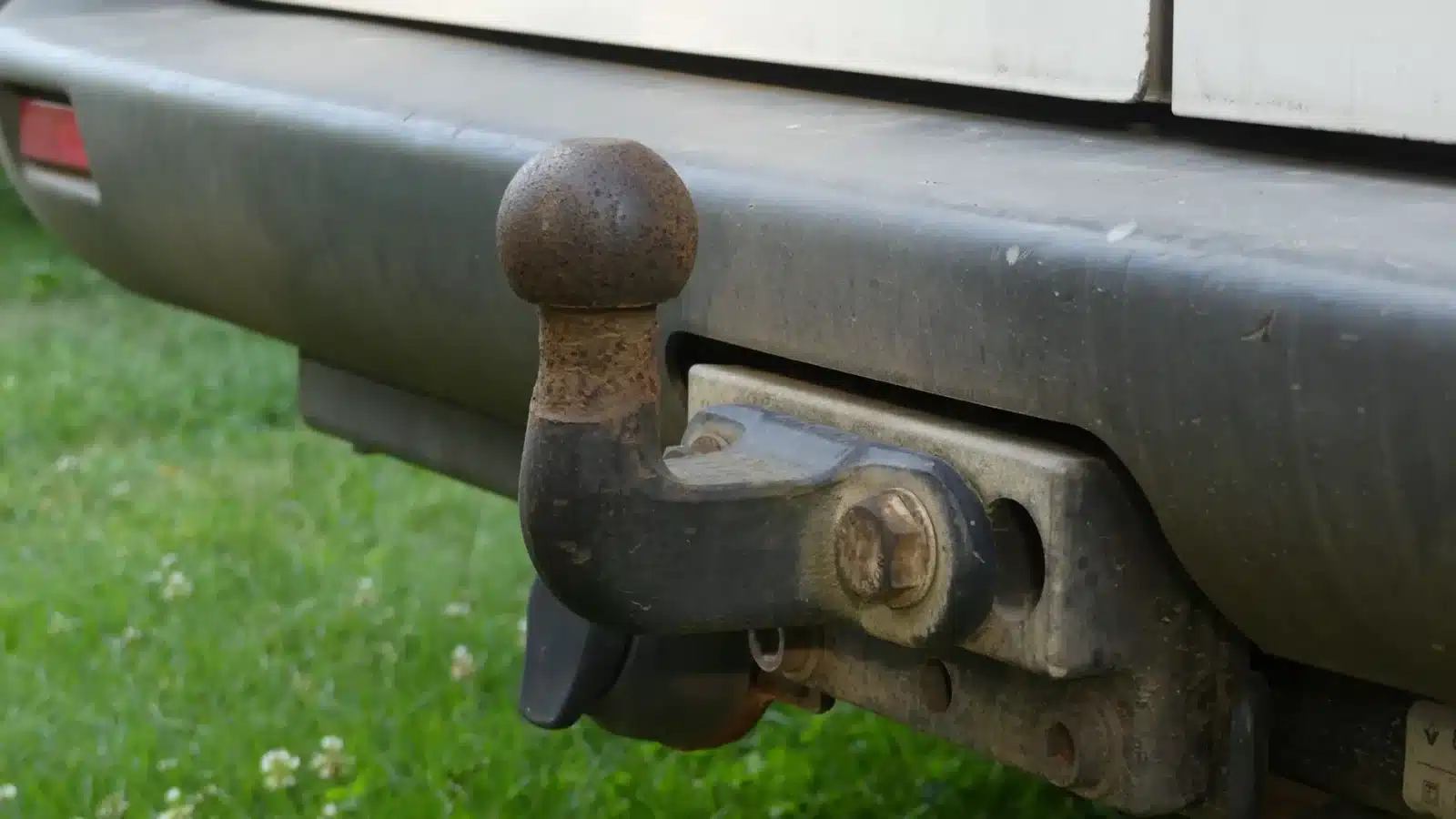
For a plumber towing a trailer with a mini-digger, or a landscaper transporting a wood chipper, a tow bar is a must. Cost? Between €500 and €1,500, depending on the model (fixed or detachable) and the vehicle’s power. Here’s what you need to know before signing the quote:
A fixed tow bar is sturdier, but it protrudes permanently and can scratch other cars’ bumpers in car parks. A detachable model can be removed in seconds, but it costs more and needs secure storage (theft risk). For fleets, opt for approved tow bars with a D-value (towing capacity) suited to your vehicle’s gross weight: a 3.5-tonne van won’t pull the same load as a 7.5-tonne one.
Regulations: since 2021, all tow bars must be approved and listed on the vehicle’s registration document. Without this update, you risk a €135 fine and having your vehicle immobilised. For trailers over 750 kg, a trailer brake is mandatory.
4. VASP approval: what changes when your van becomes a living space
If you fit out your van to sleep or cook in it, VASP approval (Véhicule Automoteur Spécialisé – Specialised Motor Vehicle) becomes mandatory. Five conditions trigger this requirement:
- Fixed storage (bolted shelves, not mobile crates).
- A table and seating (benches or convertible seats).
- A fixed or convertible bed (a mattress on blocks doesn’t count).
- A fixed kitchen (gas, electric or diesel—portable stoves don’t qualify).
- Permanent fittings that can’t be removed in under 2 hours.
If your fit-out is basic (e.g., a folding bed and a cool box), you can stay in the CTTE category (light commercial vehicle) and avoid VASP. But beware: without approval, your insurer may refuse to cover a claim related to the fit-out. For a tradesperson using their van as a mobile office, VASP isn’t needed—unless you add a sleeping area.
5. Mistakes to avoid: costly pitfalls
Fitting out a van is like preparing a worksite: a mistake at the start costs dear later. Here are the most common traps:
- Skipping insulation: an uninsulated van turns into an oven in summer and a fridge in winter. For sensitive tools (electronics, paint), it’s a risk of damage.
- Exceeding the gross vehicle weight (PTAC): a 3.5-tonne van loaded to 3.8 tonnes means a €135 fine and a risk of licence suspension. Weigh your vehicle after fitting it out.
- Forgetting ventilation: poorly ventilated wooden lining traps moisture and rots within months. Plan for air vents or a dehumidifier.
- Choosing a roof rack that’s too heavy: aluminium is ideal for small vans, but for a 7.5-tonne van, treated steel is essential.
For fleets, one tip: standardise fit-outs. Identical wooden kits for all vehicles simplify maintenance and cut costs. And if you lease your vans, check that the insurance covers the fit-outs—most standard policies don’t.